

• Link to X
  • Link to LinkedIn
  • Link to Youtube
  • Link to Instagram
  • Link to Facebook
  • Link to Vimeo
Don Phin Esq.
  • About
  • Speaking & Training
    • In-Person
    • Testimonials
  • Online Programs
  • 40| |40 Solution
  • Coaching
  • Blog
  • Partners
  • Free Tools
  • Contact
  • Menu Menu
You Are Not Your Company's Crisis

You Are Not Your Company’s Crisis

May 15, 2026

A note for leaders who are holding everything together — and starting to wonder if they can.


He came into our first coaching session carrying something heavy.

Not a laptop. Not a notebook. The weight was invisible — but I could see it in the way he sat down. Slightly forward, like he was ready to be asked to solve something.

He was a director at a large HVAC company. Sharp guy. Multi-talented. The kind of leader companies lean on when things get hard. And things had gotten very hard.

The company was operating at a loss. Staff had been cut. Cash was tight. And somewhere along the way, he had quietly absorbed five different roles — director responsibilities, GM-level decisions, field support, client management, preconstruction, equipment challenges. He was doing the work of a small team. Alone.

He described it matter-of-factly, the way exhausted people do when they’ve stopped expecting anyone to notice.

I asked him one question before we went any further.

“If the company’s financial situation were resolved tomorrow, which of your problems would actually go away?”


He was quiet for a long moment.

“I’m not sure, but probably not as many as I thought,” he finally said.

That was the beginning of the real work.


The Two Stories

When a company is in crisis, something dangerous happens to its leaders. They start to confuse two very different narratives.

There is the company’s story — the financials, the headcount, the market pressure, the operational chaos. That story is real. It has weight. It has consequences.

And then there is the leader’s story — who they are, what they’re capable of, where they’re headed, what kind of leader they’re becoming. That story is also real. And it belongs entirely to them.

The problem is that when you’re inside a crisis, these two stories collapse into one. The company’s struggle starts to feel like a verdict on your leadership. The operating loss starts to feel like your operating loss. The dysfunction around you starts to feel like evidence of something wrong with you.

It isn’t. Well, at least it usually isn’t.

One of the most important things a leader in crisis can do is draw a clear line between the two stories — and choose, deliberately, to keep writing their own.

“The company’s story is real. But it is not your identity. You get to write your own story — independent of the company’s outcome.”


Role Collapse: The Hidden Trap

There’s a specific trap that catches good leaders in troubled organizations. I call it role collapse.

It happens gradually. Someone leaves — there’s no budget to replace them. A function goes uncovered — you step in temporarily. A crisis hits in your lane and three other lanes at once — you handle it because you can. And before you realize it, you’re not doing your job anymore. You’re doing everyone’s job.

Role collapse is insidious because it looks like dedication. It feels like leadership. People around you may even be grateful for it.

But here’s what’s actually happening: when one person fills five seats, nobody fills any of them well. Decisions get made by whoever is least exhausted. Strategy becomes reactive. And the leader — the one holding it all — starts to burn out in a way that feels deeply personal, even though it’s fundamentally structural.

The question I ask leaders in this situation isn’t “how do you manage better.” It’s:

“Which of these roles actually requires YOU — and which ones just landed on you by default?”

That distinction is the beginning of a way out.


The Triage

I have leaders in this situation sort every responsibility they’re carrying into three buckets:

Only Me. These are the things that genuinely require their specific judgment, relationships, or authority. No one else can do these right now — and that’s okay.

Could Be Someone Else. These are the things that landed by default. With some trust and a little training, someone else on the team could own them. The leader is doing them because no one handed them off — not because they have to.

Doesn’t Need to Happen. This one surprises people most. In crisis mode, organizations generate enormous amounts of low-value activity — legacy habits, performative busyness, meetings that exist because they’ve always existed. These don’t need a better owner. They need to stop. It’s what Stephen Covey would call the unimportant and non-urgent.

Most overwhelmed leaders have never done this exercise. The relief from simply naming it — out loud, on paper — is immediate and significant.


The Leader Floor

One of the cruelest aspects of burnout is what it does to the people around you.

Stretched leaders default to one of two failure modes. They go silent — too depleted to communicate, too overwhelmed to be present. The team reads this as abandonment and starts to quietly panic. Or they hover and micromanage — anxiety masquerading as oversight. The team reads this as distrust and starts to quietly disengage.

Either way, the team loses the one thing they need most in uncertain times: a steady signal that someone is paying attention.

What I work with leaders to build is what I call a leader floor. Not the ceiling — how much they can give when everything is going well. The floor — the minimum they commit to keeping even on the hardest weeks.

For most leaders, that floor is simpler than they think:

One 15-minute weekly touchpoint with the team — no agenda, just presence. One individual check-in per week, rotating through the team. One piece of genuine, specific recognition per week.

Three things. Sustainable at 100% workload. And powerful enough to hold a team together through almost anything.

Because what a team needs in a crisis isn’t a perfect leader. They need a present one.


Confidence Doesn’t Come Back Through Thinking

When leaders have been in survival mode for a long time, something subtle happens to their confidence. It doesn’t disappear dramatically — it erodes. Slowly. Quietly. Until one day they look up and realize they’re not sure they’re good at this anymore.

The instinct is to reflect on it. To think your way back to confidence. To remind yourself of your track record and your capabilities and your potential.

That doesn’t work. Not really. Not at depth.

Confidence comes back through action. Specifically, through deliberately stacking small wins — things you own completely, execute visibly, and can point to as proof that you’re still sharp.

I had the director in my story identify one initiative he could drive from idea to visible result in 30 days. Not a company turnaround. Not a strategic overhaul. One real problem, one clear solution, one outcome he could hold up and say: I did that.

The problem doesn’t have to be big. It has to be real, and it has to be his.

“Confidence comes back through small wins stacked deliberately — not through reflection, but through evidence.”


Stay or Go — From Clarity, Not Desperation

In our final session, we arrived at the question he’d been circling since the beginning.

Should he stay? Or was it time to find an organization where he could grow with the right support?

I’ve learned to be careful here. Coaches and advisors — even well-meaning ones — can accidentally push leaders toward a decision that’s really the advisor’s preference, not the leader’s truth.

So I don’t answer the stay-or-go question. I help the leader get clear enough to answer it themselves.

The question I ask isn’t “should you stay or leave?” It’s:

“It’s two years from now. You’re thriving as a leader. You are your dream job. Describe the environment you’re in — what does it look like, who’s around you, how do you feel on Monday morning?”

That 2-year vision becomes a North Star. Every decision — stay, go, which opportunity to pursue — gets filtered through it. A leader who stays by choice is a completely different animal from one who stays by default. And a leader who leaves with clarity is a completely different animal from one who leaves in desperation.

The goal isn’t to make the decision for them. It’s to help them make it from their story — not the company’s.


What He Learned

By our fifth session, the director hadn’t fixed the company. The financial challenges were still real. The workload was still significant.

But something had shifted. He was carrying it differently.

He had a clear sense of what was his to own — and what wasn’t. He learned to delegate more effectively and to say no. He had rebuilt a small but consistent presence with his team. He had executed one initiative that reminded him he was still sharp. He had a written vision of his leadership life two years out.

And he had something harder to quantify but more important than any of it: he had stopped letting the company’s story overwrite his own.

That’s the work. Not crisis management. Not tactical advice. Leadership development under real conditions — which, if you do it right, prepares someone not just for this company, but for the next three years of their career.

https://www.donphin.com/wp-content/uploads/2026/05/bigstock-Depression-66004288.jpg 1067 1600 Don Phin https://www.donphin.com/wp-content/uploads/2015/02/don-phin-logo.png Don Phin2026-05-15 02:42:052026-05-15 02:49:38You Are Not Your Company’s Crisis
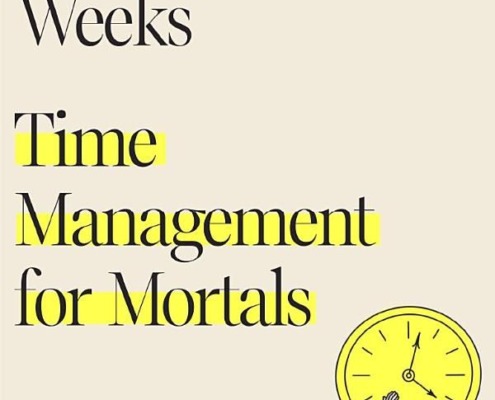
Book - Four Thousand Weeks

Any time I’m recommended a book I read it.

May 29, 2023

Any time I’m recommended a book I read it. The latest was 4,000

Weeks: Time Management for Mortals by Oliver Burkeman. Having done many deep dives into the very idea of time, I found no new ahas, but many great reminders, and thoughts generated, that will allow you to be in control of your time:

Live your life as it unfolds in time
The bane of limitless productivity, distraction, and speed
Do you ever really feel “on top of things“?
We can all feel like King Sisyphus
You will never get it all done…and that is OK!
We ARE a limited amount of time
It’s all borrowed time
Distraction is the biggest problem
The obsessive planner demands reassurances from the future. Good luck.
Be prepared for surprise endings.
Anything can happen. What will be will be. Que sera, sera.
The power of chance occurrence
Plans are not guarantees
“I don’t mind what happens”
What is the value of time spent doing…?
Give time it’s due
You can’t rush your way to peace
You will never eradicate all your problems
Who wants to be free… and alone?
Where are you too comfortable?
Where are you setting impossible standards for yourself?
Why am I myself?
Have you accepted who you are yet?
Where are you playing the when and then game?

Like I said, great reminders!

https://www.donphin.com/wp-content/uploads/2023/05/1685384943095.jpg 923 600 Monica Tackitt https://www.donphin.com/wp-content/uploads/2015/02/don-phin-logo.png Monica Tackitt2023-05-29 19:48:112023-05-29 19:52:04Any time I’m recommended a book I read it.

Five Emotional Traps that Get in the Way of Success

Five Emotional Traps that Get in the Way of Success

June 21, 2022

Much what much of what gets in the way of success is… us! Here a five emotional traps we should strive to avoid:

  1. The desire to be comfortable– as Paulo Coelho said, “only the mediocre are ever truly comfortable”. If your primary goal is to be comfortable then you can expect to get run over by someone not interested in being comfortable. There is no growth without discomfort, so better get used to it. Where do you fear discomfort? Whose judgment is involved? Are you willing to move past it?
  2. Not realizing that the only power you will ever have is right here, right now– it is so easy to project ourselves into a painful past or fearful future. All this does is create emotional noise which gets in the way of what really matters – getting things done now. While it is important to have plans, it’s even more important to ask what’s the most important thing I should be doing right now? And then do it. Without delay. Every time.
  3. Somebody else is getting in the way– it is so easy to blame others. It is “they” who get in the way of our success. It is “they” who don’t see the full measure of our value. Guess what – it’s not their job to notice your value or to play hero for you. Take action despite others. You don’t look for what they’re doing that’s “unfair”. You look for the opportunity you will create.
  4. You don’t want to “get over it” …just quite yet– deeply successful people can weather almost any storm. That’s because they have built a strong emotional foundation. They don’t harbor on the past, but they do learn from it. Then they dust themselves off and get going again. So, what if you made a mistake or blew an opportunity. Get over it, learn the lesson and move on!
  5. There is a hidden entitlement mentality– this is where “they” owe you something simply because of how wonderful you are. God’s gift to this planet. You wouldn’t admit to that…but there it is. Remember this: success is your responsibility and nobody else’s.

While there are plenty of other saboteurs, these five are a good place to start. Where do you find yourself trapped?

https://www.donphin.com/wp-content/uploads/2022/06/Five-emotional-traps-that-get-in-the-way-of-success-480-×-320-px.png 320 480 Don Phin https://www.donphin.com/wp-content/uploads/2015/02/don-phin-logo.png Don Phin2022-06-21 08:55:322022-06-21 09:00:54Five Emotional Traps that Get in the Way of Success
Don Phin -Hero Story

Hero Story

August 13, 2020
https://www.donphin.com/wp-content/uploads/2020/08/Screen-Shot-2020-08-13-at-6.50.50-PM-scaled.jpg 1419 2560 Don Phin https://www.donphin.com/wp-content/uploads/2015/02/don-phin-logo.png Don Phin2020-08-13 16:18:302020-08-13 16:57:29Hero Story

Don’t Let Your Story Kill Your Sales

Don’t Let Your Story Kill Your Sales

July 30, 2020

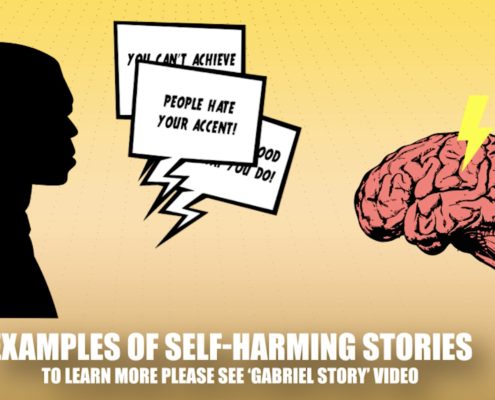
Over the last few years, I’ve been doing a great deal of coaching and notice the power of the stories my clients tell themselves. So I whipped up this presentation for a client’s sales team… and they loved it.

https://vimeo.com/442811040 If you are up for it, I would love your feedback too! Brutal honesty will be appreciated. How can I make it even better?


https://www.donphin.com/wp-content/uploads/2020/07/image004.jpg 253 477 Don Phin https://www.donphin.com/wp-content/uploads/2015/02/don-phin-logo.png Don Phin2020-07-30 05:46:122020-07-30 12:23:41Don’t Let Your Story Kill Your Sales
Page 1 of 41234

Latest Blog Posts

  • You Are Not Your Company's Crisis
    You Are Not Your Company’s CrisisMay 15, 2026 - 2:42 AM
  • Book - Four Thousand Weeks
    Any time I’m recommended a book I read it.May 29, 2023 - 7:48 PM
  • Five Emotional Traps that Get in the Way of Success
    Five Emotional Traps that Get in the Way of SuccessJune 21, 2022 - 8:55 AM
  • Here’s a Healthy and Fun Way to Engage All of Your Employees!
    Here’s a Healthy and Fun Way to Engage All of Your Employees!June 17, 2021 - 6:57 PM
  • Dee Hock- Insights from a Visionary
    Dee Hock- Insights from a VisionaryJune 6, 2021 - 10:50 AM
Search Search

Blog Categories

  • Career
  • Coaching
  • Creativity
  • Culture
  • Emotional Intelligence
  • Health
  • Hiring
  • Human Resources
  • Leadership
  • Lifestyle
  • Spirit
  • Strategic HR
  • Stress
  • Stress reduction
  • Wellness

Quick Browse

  • Home
  • About
  • Contact
  • Free Tools
  • Blog
  • Partners

Services

  • Speaking & Training
  • Coaching
  • 40| |40 Solution
  • Testimonials

Contact

Don Phin

(619) 852-4580

don@donphin.com


© 2016- Don Phin Esq., All Rights Reserved. | Website Hosting & Web Development by RAD TECH
  • Home
  • Contact
  • Privacy Policy
  • Terms & Conditions
  • Accessibility
Scroll to top Scroll to top Scroll to top